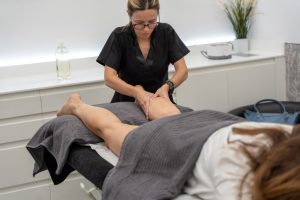
Helping Patients Transition from Intensive Therapy to Self-Management
Introduction
Intensive lymphedema therapy can meaningfully improve swelling, tissue texture, mobility, comfort, and function. But successful treatment isn’t simply about reducing edema—it is also about helping patients maintain those gains as therapy becomes less frequent.
The transition from intensive therapy to self-management is a critical phase of care. Patients may feel uncertain when appointments become less frequent, particularly if they have relied on their therapist for treatment, compression guidance, skin monitoring, and reassurance. A thoughtful transition plan can help patients feel more confident and independent while still knowing when they need professional support.
Start the Transition Early
Don’t introduce self-management only at the final treatment visit. Patients benefit from learning the skills they will eventually use at home throughout therapy.
As treatment progresses, therapists can gradually shift responsibility to the patient. Instead of simply performing compression or skin-care techniques for them, therapists can explain the reasoning behind each intervention and give patients opportunities to practice.
This creates a gradual progression from “I need my therapist to manage this” to “I understand how to manage this myself.”
Teach the “Why,” Not Just the “What”
Patients are more likely to follow a self-management plan when they understand why each component matters.
For example, rather than simply instructing a patient to wear compression, explain how it supports fluid management and helps maintain changes achieved during treatment. Similarly, connect skin care to protecting the skin barrier and reducing the risk of complications.
Education transforms individual instructions into a system patients can understand and adapt.
Build a Sustainable Routine
A self-management plan needs to fit the patient’s actual life.
Consider the patient’s:
* Work schedule
* Family responsibilities
* Physical activity
* Travel
* Ability to apply compression independently
* Access to appropriate garments and supplies
* Dexterity and mobility
* Comfort with performing self-care techniques
* Personal goals and preferences
A plan that looks ideal on paper but is difficult to maintain in everyday life is unlikely to succeed.
The goal is not to create the most complicated routine. It is to create a realistic routine the patient can consistently perform.
Focus on Core Self-Management Skills
Before reducing treatment frequency, therapists should make sure patients understand the fundamentals of ongoing management. Depending on the individual’s condition and plan of care, this may include:
Compression: Understanding when and how to use prescribed compression and recognizing changes in fit or effectiveness.
Skin care: Monitoring the skin, maintaining appropriate hygiene and moisturization, and recognizing potential signs of infection or irritation.
Movement and exercise: Incorporating appropriate movement into daily life to support function and overall health.
Self-management techniques: Practicing therapist-recommended techniques that the patient can safely perform independently.
Self-monitoring: Recognizing changes in swelling, tissue texture, skin condition, sensation, or function.
These skills give patients a framework for responding to changes rather than relying exclusively on scheduled appointments.
Teach Patients What to Watch For
One of the most important parts of self-management education is knowing when a change is expected and when it deserves attention.
Patients should understand what their typical presentation looks and feels like so they can recognize meaningful changes.
Depending on the individual situation, changes that warrant professional follow-up may include:
* Increasing or persistent swelling
* Changes in tissue firmness or texture
* Skin changes or areas of irritation
* Recurrent episodes of redness, warmth, or other signs of infection
* New discomfort or changes in function
* Difficulty tolerating or fitting into compression garments
* A noticeable change that does not resolve with the patient’s usual management routine
The goal is not to encourage patients to focus too much on every fluctuation. It is to help them recognize patterns and respond appropriately.
Make Compression Management Part of the Transition
Compression garments are often central to long-term lymphedema management, making garment education especially important during the transition.
Patients should understand how their garment should fit, how to care for it, and when it may no longer provide appropriate support. They should also understand that changes in limb size or shape may require reassessment.
A patient who can identify a garment problem is better equipped to address it before it becomes a larger barrier to self-management.
Use “Teach-Back” Instead of Asking, “Do You Understand?”
A simple question like “Do you understand?” often elicits an automatic yes.
Teach-back provides a more useful assessment. Ask the patient to demonstrate or explain the plan in their own words.
For example:
“Show me how you would put this on at home.”
or:
“If you noticed that your swelling was increasing over several days, what would you do?”
This allows the therapist to identify gaps in understanding before the patient leaves intensive care.
Normalize Follow-Up Care
Transitioning to self-management does not mean the patient has been discharged from needing professional guidance forever.
Lymphedema management can change over time. Patients may benefit from periodic reassessment, particularly following significant changes in health, activity, weight, surgery, compression needs, or symptoms.
Reinforce that follow-up is not a sign of failure. It is part of long-term management.
Measure Success Differently
During intensive therapy, progress may show up as measurable changes in limb volume, tissue quality, mobility, or symptoms. During the maintenance phase, success may look different.
A successful transition may mean that the patient:
* Understands their condition
* Can perform essential self-management activities
* Uses compression appropriately
* Recognizes changes early
* Knows when to contact their healthcare team
* Can incorporate management into everyday life
* Feels confident rather than dependent
The ultimate goal is not simply to reduce swelling. It is to help patients develop the knowledge, skills, and confidence to participate actively in their long-term care.
The Therapist’s Role Changes—But Doesn’t Disappear
The transition from intensive therapy to self-management shifts the therapist’s role.
Early in treatment, the therapist may provide significant hands-on intervention and closely guide the patient’s care. Over time, the therapist becomes more of an educator, coach, problem-solver, and resource.
That transition should be intentional.
When patients leave intensive therapy understanding what to do, why they are doing it, how to recognize changes, and when to seek help, they are better prepared to maintain their progress and manage their condition with greater confidence.
The goal of intensive therapy is not to create dependence on treatment. It is to give patients the tools to manage well beyond the treatment room.

Interested in taking an ACOLS Course?
The Academy of Lymphatic Studies offers certification courses in lymphedema management and manual lymphatic drainage. CEU’s are available for nurses in select states!
For more information, course listings, and to register for an upcoming course, Click Here!